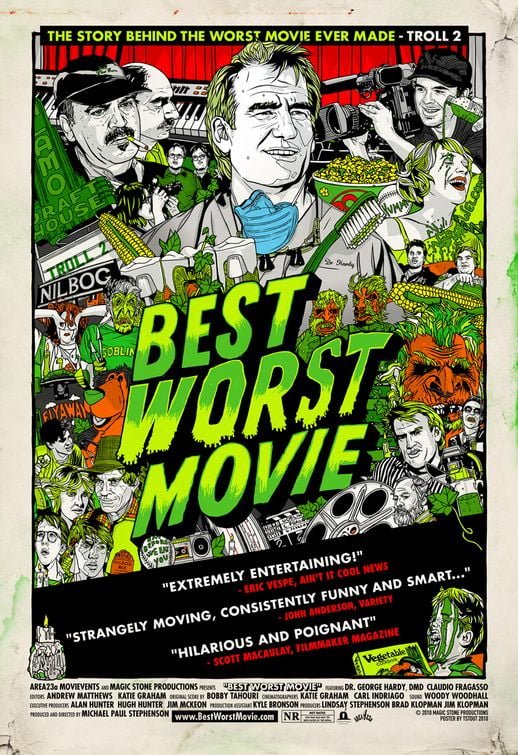
I rented Best Worst Movie, a documentary regarding the cult film Troll 2, with relatively few expectations. I knew that the documentary had been making the rounds on the independent film circuit, and had heard good things about it. I've also seen the film that the documentary revolves around, so I am well aware of the depths of wretchedness to which Troll 2 succumbs. Still, I didn't really know what to make out of a film that was going to attempt to chronicle the story of the worst movie ever made some twenty years after the original film's release.
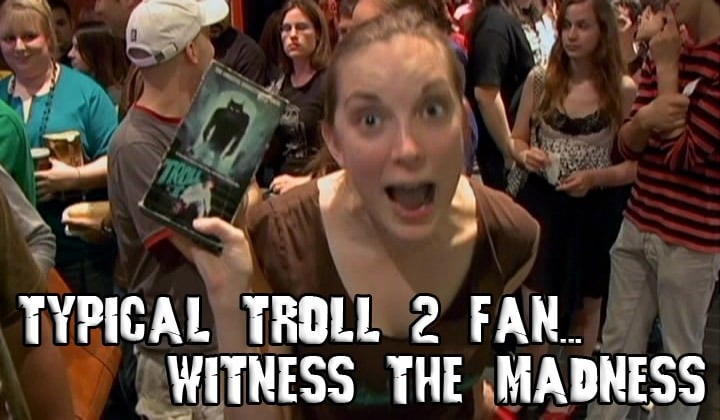
Best Worst Movie is about Troll 2, but it doesn't really chronicle how Troll 2 was made. Yes, there are interviews regarding the atmosphere on set, but these moments sharing behind the scenes anecdotes are not the focal point. The documentary is really about the fans of Troll 2 and about the cult following that has risen around the film. It is about the idea that somehow this crappy little film from 1990 has managed to pervade the consciousness of pop culture and resonate with its audience in a manner never really intended by those involved in making it. In case it isn't clear yet, I really enjoyed this film.

Michael Stephenson is the director of Best Worst Movie and is also the child actor that portrayed Joshua Waits, the main protagonist of Troll 2. Like most of the cast, Michael has spent the majority of his life just trying to forget about the embarrassingly-awful film he starred in. As the years passed and young Michael grew, so did the cult of Troll 2 until it became a sort of living entity that would no longer be ignored. In making Best Worst Movie, Michael Stephenson has faced Troll 2 and owned it, transforming the film from a source of personal embarrassment and into an experience deserving of celebration.
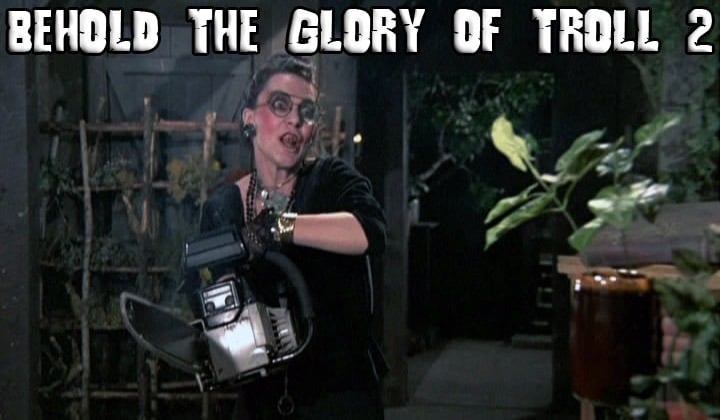
Joining Michael on his odyssey to document the strange wonder surrounding the worst film ever made is George Hardy, the actor that portrayed Michael's father in Troll 2. A good portion of the documentary focuses on George Hardy and paints a pleasant picture of this enthusiastic and good-natured dentist from Alabama. George comes off as a genuinely nice guy, one perhaps surprised by the Troll 2 phenomenon but overly-willing to embrace it. The documentary jumps around the country, showing conventions and fan gatherings where throngs of people show up to watch Troll 2 and meet the cast members. George is our ambassador to these moments, clearly thriving on the crowds' reaction to him and his reciting of lines from the film. Whatever your assessment of George Hardy as a person or his prowess as an actor, it is clear that this is a man that loves to perform.
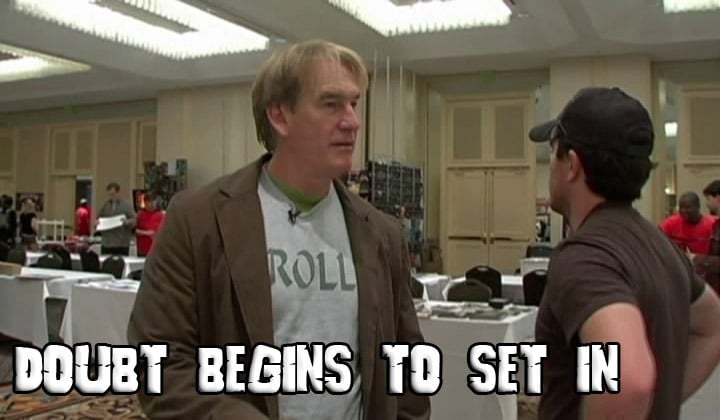
Although mostly positive in the tone, there are a few lingering moments of near-heartbreaking poignancy. The director of Troll 2, Claudio Fragasso, although happy for the attention surrounding this nearly-forgotten film clearly has some reservations accepting the film as being the worst ever made. George Hardy also has a moment of self-realization at a horror convention where none of the fans seem to know or like Troll 2. He makes the observation that fans of Troll 2 and fans of horror in general may not have a large degree of overlap. This point is reinforced by George himself over the course of this segment, unable to correctly recall the title of genre heavyweight "A Nightmare on Elm Street" at one point. I've personally spent some time thinking about this over the last few days as I am one of those people that love both horror and B-movies. I'd never really considered that my point of view might be the exception rather than the rule.
It's clear that the reputation of Troll 2 is one that has grown organically and as a result of a genuine love from B-movie fans. The cast and crew of Troll 2 did not set out to make the film that now exists, but there are some of us that will be forever thankful that things turned out the way they did. I'm glad to see that at least some of the people making these films get as much enjoyment out of them as I do, even if it takes them a decade or two to realize it.
The Bottomline: Best Worst Movie is a thoughtful look at both B-movie fandom and the effects of cult followings on those involved in the making of these films. This is a balanced documentary with some thoughtful points to make. If B-movies are a hobby of yours, you'll be as happy as I was to see the genre get a love letter as well made as this.
Five stars.
There are a lot of low budget horror films where kids at a camp get cut down in creative ways for breaking the various rules of slasher lore. Sure, the slasher sub-genre can be repetitive as hell, but isn't that really sort of the point? There's a certain comfort in the slasher formula. The films are just as much about rooting for the villain as they are about hoping that the protagonists survive. As I've mentioned before, part of the joy of these films is discovering just how these films deviate themselves from the expected story beats, whether just by creative death sequences or something more involved.
With that in mind, Camp Slaughter (AKA Camp Daze) is a pretty creative entry into the over-saturated slasher market. The screenwriter, Draven Gonzalez, clearly had the beginnings of a unique and fun plot when the project began. The story starts like any slasher flick, with a group of college-age students on a road trip. They manage to break down close to Camp Hiawatha, a standard sort of summer camp filled with your usual assortment of counselors and teenage campers. When kids start turning up dead, it quickly becomes apparent that something is amiss. Our lead characters band together and manage to survive the night of terror- only to wake up the next morning to find everyone at the camp is safe and sound.

This is where the film is at its most interesting. Our protagonists quickly learn that they are stuck in a sort of Groundhog Day time warp. Everyone at the camp is doomed to relive their final day over and over again, cut down at the hands of the slasher ad infinitum. Worse still, some of the camp residents seem to be aware of their fate, but are helpless to stop it from occurring. The main characters come from a time and place similar to our own, and are key to finally putting the spirits of these doomed teens to rest. Having main characters from the modern age is a fun idea and allows the movie to break the fourth wall without just shamelessly winking at the audience. The premise is Camp Slaughter's greatest strength.
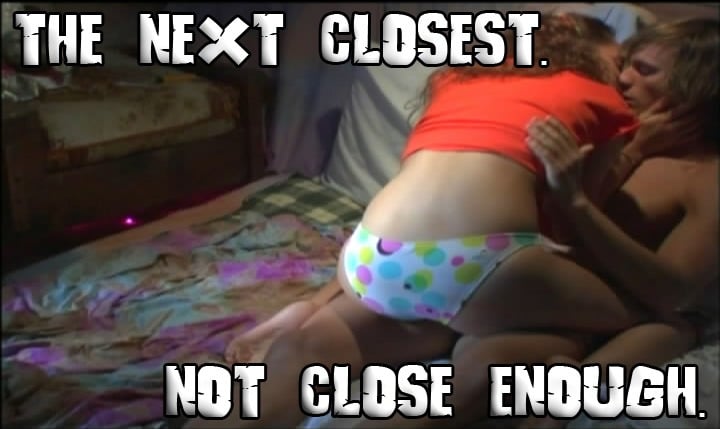
Unfortunately, the rest of the film pales in comparison to its imaginative plot. The script itself is a mess of awkward dialogue, made worse by poor performances pretty much all around. This is a self-feeding negative loop, so its hard to know if the script writers or the actors are really to blame. Shot composition is passable, but overall quality looks like the movie was shot on video. This last really isn't a complaint, but know that low-budget means exactly that.

The make-up and general special effects are nothing special, but I did appreciate the elaborate set up to at least a couple of kills in the film. In these, the killer has left his victim strung up in some compromising position, hooked up to simple trap apparatuses that is sprung by the arriving help. These deaths really made my think about the typical slasher trope of the survivor girl stumbling upon the bodies of her deceased friends. This modification does the traditional cliche one better by ensuring the victim's final moments are witnessed by the protagonist. Although one could argue this has been played out by the Saw films for several years now, I'd like to see this idea expanded upon in other slasher films.

Ultimately, I did enjoy Camp Slaughter, but I feel like it fell victim to its own desire to be a smart slasher homage. The time travel premise is smart but needed additional thought and script-revision to be considered well-done. The intentionally cliched 80's characters are fun but one-dimensional and not particularly well played. There's little gore, there's zero female nudity, and the killer lacks a unique gimmick. Further, the reveal regarding the killer's identity is an overcomplicated twist that makes the film feel like it's trying to do too much. The story would have benefited by concluding the time-warp storyline it initially presents in a straightforward manner.

The Bottomline: There are a lot of mediocre slashers out there, but Camp Slaughter at least attempts to do something fresh and entertaining. You have to give points to the filmmakers for that. I hope they get another opportunity to do some genre work, hopefully with a larger budget and reduced scope. Worth a rent from Netflix for slasher fiends, but other genre-hounds may want to skip this one.
Three stars.
I can remember Vamp from my childhood. No, I didn't actually see the film when I was a kid, but I do remember it being listed in the TV Guide, schedule to play during a late night time slot on one of the premium movie stations. To this day I can remember reading the listing as a teenager and being tempted to set my alarm for early in the morning, tempted to sneak downstairs to watch on the family television. In my defense, the promise of both vampires and strippers contained within a single film is almost too awesome for a thirteen year old boy to ignore.
I remember the box art on the shelf at the local rental store, the cool fluorescent lights glaring off the clear plastic sleeve covering the VHS tape. I may not have known the exact content of the film, but there was something about that lipstick kiss on the VHS box that told me this film was naughty. Despite renting countless R-rated horror movies, I never could work up the nerve to bring this one to the check out counter.

So why do I mention, at great length no less, my personal history of admiring but never actually watching this film? I think it's to impress upon you the feeling of nostalgia that overcame me while watching this film. While I possess no previous knowledge, or therefore love, for the film, I still felt an incredible affinity for its content. Vamp is the sort of film that, even if you've never seen it, might still hold some value if you grew up during the right period of time.

The film is a product of its time, a combination horror film and teenage sex comedy. It vaguely reminds me of a John Hughes film but with vampires, a feeling no doubt reinforced by the presence of Gedde Watanabe from Sixteen Candles. All of the characters are incredibly rooted in late 1980's culture, from their dated costumes and hair to the slightly too old actors portraying them. Still, the movie is sharply written and ably acted. The two male leads are fun to watch as they engage in snappy, rapid fire dialogue. Robert Rusler in particular is extremely watchable here, and horror fans will recognize him as Grady from the earlier A Nightmare on Elm Street 2: Freddy's Revenge. Also deserving mention is the undeniably cute Dedee Pfeiffer who gives a strong performance while wearing her tiger-striped leggings and zebra-print jacket with pride.

The plot of the film almost seems like a predecessor of sorts to the Quentin Tarantino written/acted vampire-stripper opus, From Dusk 'til Dawn. As part of their initiation, two college buddies are tasked with traveling to the Big City (which one? I don't know) and bringing a stripper back for entertainment at a fraternity party. They borrow a car from the rich kid, played by Gedde Watanabe, and make their way to the After Dark Club. The boys quickly outstay their welcome, discovering first hand that this wannabe bordello is actually staffed by bodacious vampire stripper babes! Needless to say, the protagonists go on to have a pretty bad day.

For a film focused on obtaining the services of a stripper, there's surprisingly little nudity in the film. Although, that's not to say that scantily clad vampires don't fill the frame for a good portion of the film's ninety-three minute runtime. Most times clever costuming hides the naughtiest of naughty bits, leaving the film with only a few bare breasted shots. Rest assured, there are plenty of flat 80's asses on display though. Most perplexedly, the head vampire stripper is played by the androgynous yet striking Grace Jones. I can't be sure how it played back when the movie was first released, but her main-stage strip show doesn't even begin to approach the adjective we now know as 'sexy.' It's even more odd to watch the strip club patrons within the movie applaud her act, as though they were watching a different show than we, the viewers, were privy to. Story-wise, I'll just attribute it to her otherworldly vampiric allure and move on. I also appreciated the sarcophagus and other assorted Egyptian imagery. It suggests a much deeper back-story in regards to the origins of these vampires, even if it is never directly addressed.

There's not much here in terms of gore or creative deaths, but a few people do get munched on and a few vampires do get staked or burned. There are a few action sequences, car chases and the like, and the budget is clearly being stretched in those sequences. But really, special effect aren't the driving force of this movie. The fun teen flick atmosphere and constant tease of probably nudity makes this a schlocky if somewhat hollow good time. The charisma of the lead actors will probably be the deciding factor for you, and I found their performances to be engaging right from the opening scene.

The Bottomline: My experience with Vamp was a fun, nostalgia-fueled celebration of a begotten time in cinema. My only unfulfilled wish is that I no longer have the chance to take the suggestive cover art and slap it down on the counter at the local rental store.
Four stars.
Alien Raiders (2008) is an entertaining, low-budget, alien-infestation flick owing much of its plot to John Carpenter's classic remake, The Thing. The biggest factor working against this film is its generic title, leaving the would-be rental customer with the distinct impression that this film might have been made as an Asylum or SyFy channel original.

Don't get me wrong, I love Mega Shark vs Giant Octopus as much as the next guy, but its the sort of film that you watch when you're still waiting for Netflix to ship out your latest batch of celluloid goodness. With a title like Alien Raiders it would be easy to assume that this film shares a similar heritage whose results could only be described as dubious in quality. However, if you can overlook this unfortunate first impression and still happen to pick Alien Raiders up off of the rental shelf, I can assure you that you will likely be rewarded for your 85 minutes and the minimal monetary investment.

The premise is simple; a group of armed gunmen storm into a small-town grocery market and quickly announce their intentions to rob the place. Something is immediately amiss, as instead of taking the money and leaving, the gunmen take the customers hostage and chain up the exits. The situation quickly escalates when a small-town cop takes it upon himself to draw his gun and take out the gunmen, but not before notifying the local precinct. The cop is quickly subdued, but the police show up outside and we have the beginnings of a standard bad guy-cop negotiation plot-line.

Not exactly sounding like an alien-infestation movie yet, is it? It's an interesting set-up at a glance, definitely a refreshing approach to a film of this type. Story-wise, it turns out that the gunmen have no intention of robbing the market, but are instead searching for people infected with an alien parasite. Given that the alien host looks like a normal person, there is no knowing who is and who isn't infected, so the gunmen set out to test each and every customer in the store. It's a lot like The Thing, although the test is a bit more gruesome. I also appreciated the added intellectual element of the hostages versus the gunmen. In the early portions of the film, the audience identifies more closely with the hostages. We feel what they feel- maybe, just maybe, there are no aliens and the gunmen are simply insane.

The film is competently made, but the low budget does begin to show in the special effects. Luckily, the movie is smartly scripted and the effects shots are actually rather sparse. Oddly enough for a genre film with such a campy title, Alien Raiders unfolds as more a slow-burn and is a better film for it. One choice affecting both aesthetics and story was having one of the gunmen run around with a camcorder. Some of this footage is interspersed into the movie proper, providing brief low-fidelity glimpses at the frequently chaotic proceedings. This same mechanic also serves to provide some back story. Although this does make for some interesting visuals, having a hostage taking, gun-wielding bandit running around with a camcorder is an odd choice from a story standpoint.

There aren't any stand-out performances from the main protagonists, but all of the actors are perfectly well-suited to the material they're given. Given the background of the gunmen as explained in the film, I thought the characters weren't written in a way that properly reflected their origins. This is not an issue with the acting, but rather scripting and maybe casting. I understand the desire for the gunmen to come across as some serious bad-asses, which they do, but this does not mesh well with the background they are given.
The Bottomline: Alien Raiders is an entertaining, low-budget film that offers some new twists on the standard alien-infestation storyline. Some scripting inconsistencies might rear their ugly heads, but overall it's a solid rental. If you can get past that ridiculous name.
Three stars.
It's been awhile since I sat down and watched a fun slasher flick, and I'm happy to report that Spirit Camp (2009) is a perfectly serviceable film that helped scratch the itch. The set-up is similar to countless other genre films: a group of teenage girls attending a secluded cheerleader camp are stalked and picked off one by one.
There's the usual cast of characters, including the Bitch, the Slut, the Ditz, the Fatty, and the Loner. This roster is joined by a handful of characters with the convenient purpose of doubling as red herrings. Over the course of the hour and thirty minutes, we will watch as these unfortunate souls lose their dignity and their lives at what should have been a fun summer romping around and getting laid at Cheerleader camp.
Spirit Camp is a fairly paint by the numbers experience, but this isn't necessarily a bad thing. Let's be honest for a brief moment- the formula is one of the reasons why we fans continue to watch these films. Sure, they're predictable, but that's just part of the fun. I love watching these films to see how they deviate from the expected, to see just how they intend to carve out their own niche. Spirit Camp does this by making the loner character the main protagonist. Played ably by the attractive Roxy Vandiver, the conflicted Nikki is the only character written with any depth and is thus the only character the audience ever really cares about.
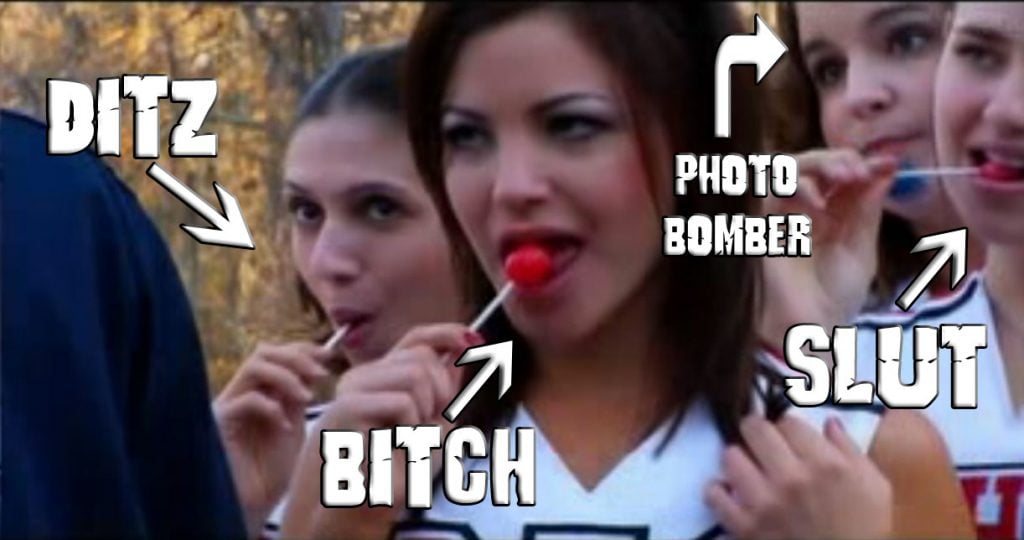
The film hinges on Nikki's likability, given that she's the only competent character that displays any use of logic. This is an interesting juxtaposition since the character's loner punk-aesthetic and criminal background seems initially intended to distance the audience from her. The beginning of the film is written in such a way as to reinforce this feeling as she is the last of the primary characters to be introduced. Further toying with the audience's expectations, Nikki is one of only two characters to appear bare-chested, and she does so twice. This subliminally helps cement her bad-girl attitude and is really trying to make you doubt whether the character will survive or not. It's both an interesting and a refreshing approach to the Final Girl concept.

The main group of girls arrive at the camp and it doesn't take long for the killings to begin. It's sort of odd when characters start disappearing and no one really questions where they've gone. This is of course mentioned in some passing dialogue, but the subject is quickly dismissed by the disinterested characters. As I've pointed out before, directly addressing a plot hole does not excuse lazy writing. Still, given the overall quality of the film and its low budget nature, I'm inclined to give them a pass on this minor nit-pick. Just be aware that some of the standard slasher tropes definitely still apply.
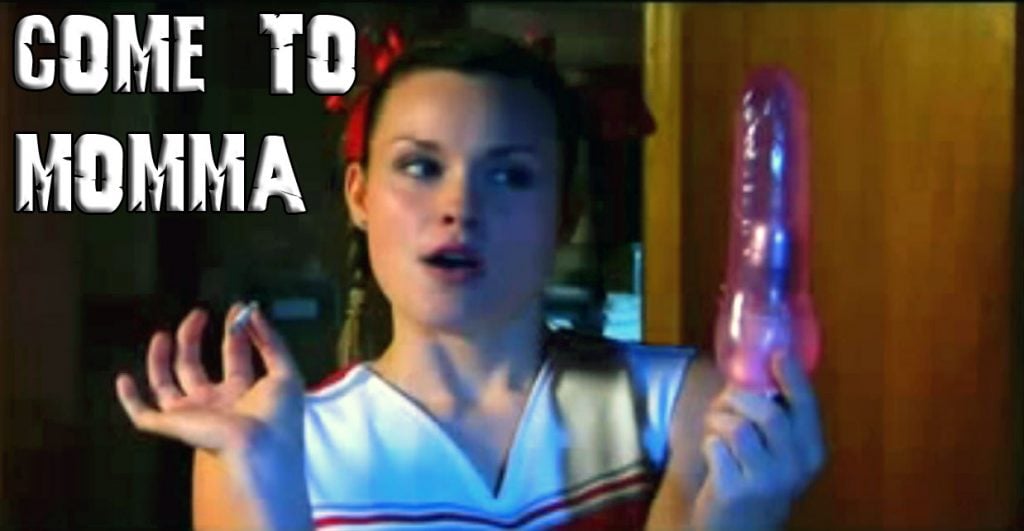
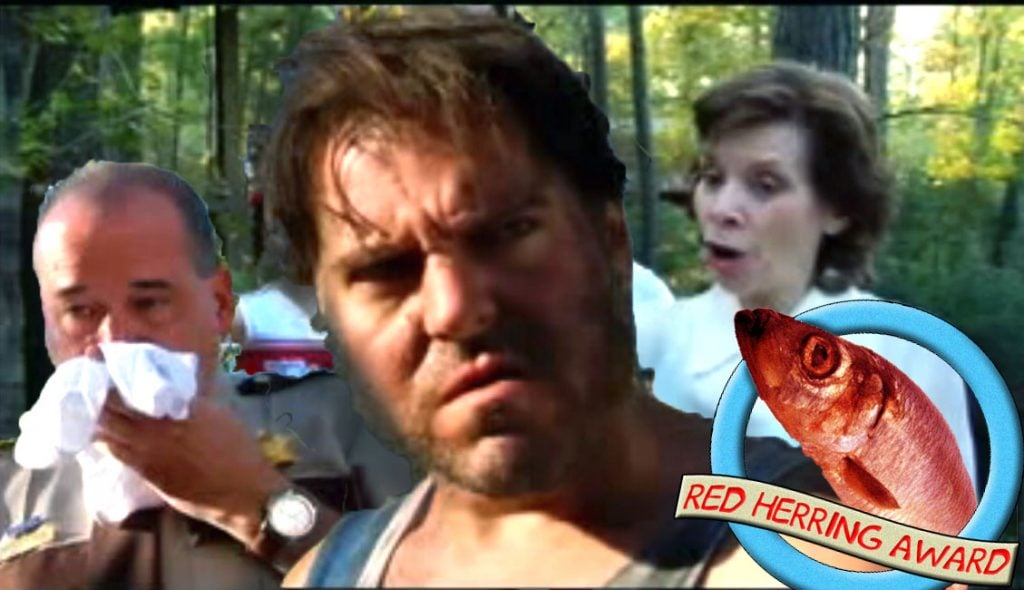
As long as we're on the topic of the standard slasher tropes, there are so many red herrings in this film it's laughable. There's the old, eccentric gas station attendant, the pervy local sheriff, the backwoods camp handy man, the elder mother whose own child died at the camp years ago, and so on. Red herrings are part of the slasher formula, and the screenwriter wasn't shy throwing them about. Sadly, I felt like the final reveal was telegraphed a little too early in the film, so most of these false leads rang a bit more hollow than they maybe should have.
On the technical side of things, I feel like I have to acknowledge all of the hard work that filmmaker Kerry Beyer poured into this movie. This man acted in, directed, wrote, edited and did the cinematography for this film. There's good use of lighting and composition, and some creative editing that make good use of several composite matte shots. Given how well made the film is technically, I'm very interested to see future projects from Mr. Beyer. My only request would be to work on the make-up effects. Many of the kill sequences were repetitive and I'm fairly sure I saw the exact same axe-wound appliance used on more than one actor.
The Bottomline: Spirit Camp is a predictable but solid slasher film. It is well made and competently acted. Definitely worth a rental for genre fans.
Three stars.
In honor of the impending holiday, the Geek has chosen for review the 2009 low-budget release ThanksKilling. You know to expect great things from a movie billed as the ultimate in low budget horror, but I was not ready for what I experienced the moment I pressed play on my Netflix Instant Streaming media player.
Don't get me wrong, this is not a movie that any one will ever put on a list of their favorite films of all time. This isn't even going on any lists of must-see so-good-it's-bad films. Still, for the entire hour and seven minutes the film lasted, I was entertained by the sheer lunacy of the proceedings.
The film's opening is tits. Yes, literally, the film begins with a lingering shot of a lone nipple on a large breast. Normally this would be a positive for a B-movie, but sadly the quality of this breast is below the standards of what I expect from modern indie cinema. Back in the 1980's, you would frequently come across nude actresses who really ought not be nude. This opening scene reminded me of this staple of a long forgotten era, as the older blonde woman whose tits are hanging out of a costume-shop puritan ensemble, really should not be naked. This is not to say she is unattractive, in fact for an older lady she's holding up very well, but still I could have done without seeing the goods.

The tits serve as an introduction to the opening chase, in which we watch the topless pilgrim fleeing through the forest with all the haste of a tranquilized turtle. During this sequence we are first introduced to a recurring purple, psychedelic camera perspective than is clearly meant to represent the view of our unseen assailant. The scene concludes when our hapless protestant trips over a rock and comes face to face with our antagonist, a rubber turkey-demon puppet. The foul adversarial fowl spews forth what might be described as a one liner were is humorous, and then dispatches the nippley milk maid with his Native American ceremonial axe.
Cue title screen.

Still with me? Really? You're still on-board for a movie about a demonic, wise-cracking turkey? Excellent. The fact that you're still here means that you know exactly what to expect from the rest of this film. We jump to the modern day, meet a group of thirty-something teenagers on their way home from college for Thanksgiving Break, and quickly get to the killing. Of the so-called "teenagers," we have aa strong showing of all the cliched characters that the genre is known for. We have the Jock, the Slut, the Nerd, the Fat Guy, and the the Last Girl are all represented. The only real surprise is we never see the Slut's rack despite a tease early in the film. The acting is uniformly terrible, partially a result of inane dialogue and poor scripting, but if you're actually still watching this movie, you clearly aren't one to care about those sorts of things.
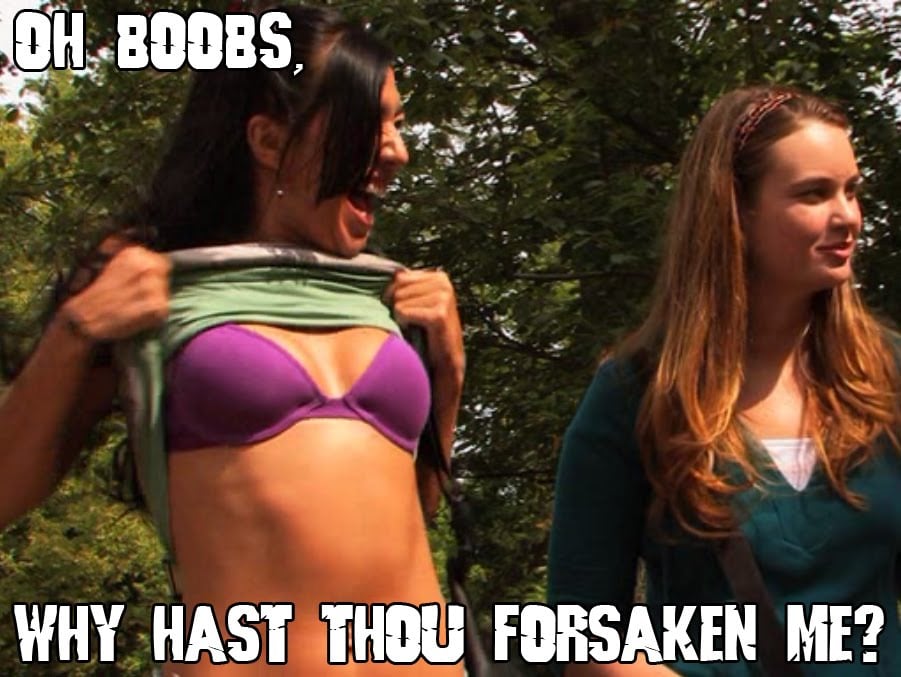
The turkey is a ridiculous rubber hand-puppet that can only be used in extreme close-up, which only serves to reinforce how damn rubbery it is. The one-liners he spews aren't particularly clever, but really did you need anything more ridiculous than a talking, killer turkey? The methods by which the turkey dispatches his victims are mostly varied and imaginative, a strong plus for a film of this type. We're even treated to a sex scene, surprisingly lacing in nudity, in which the Slut unknowingly has sex with the turkey before meeting her untimely fate. My favorite kill of the film is awarded to the Fat Guy, who undergoes a fun food-fantasy sequence that ends similarly to the chest-burster scene in Alien.
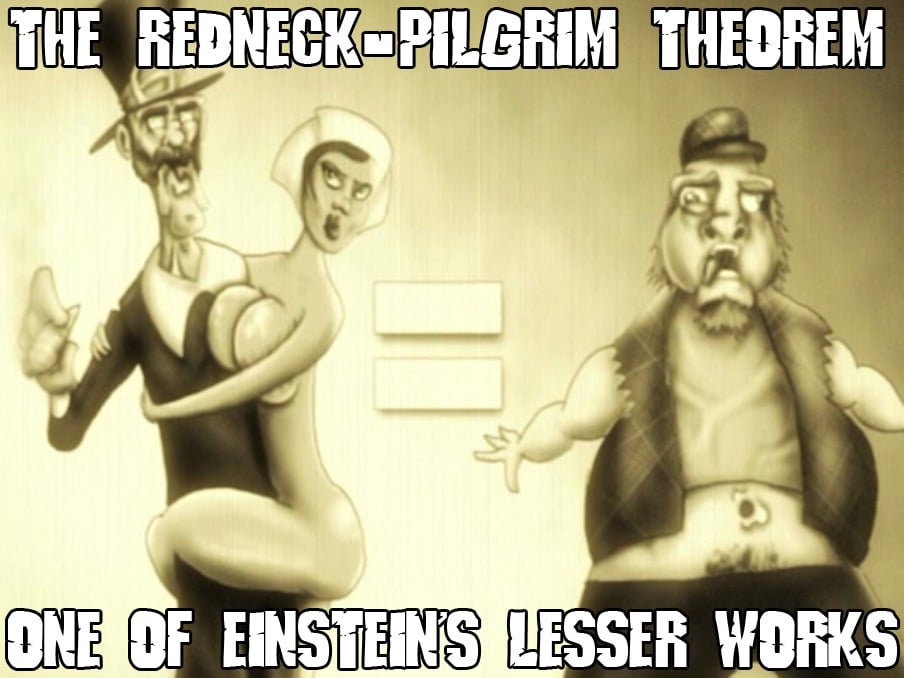
In terms of the cinematography on display, I feel that some special mention should go to the psuedo-animated scene explaining the turkey's backstory. The drawings here are fun and fit in with the cartoonish feel of the rest of the film. I'm not sure why this scene is included, whether they didn't have the time and money to costume and film live actors or if it was a aesthetic choice, but either way I felt the sequence worked well within the context of the film. The cartoon drawings make another appropriate appearance later in the film, for the previously mentioned Fat Guy food-fantasy.
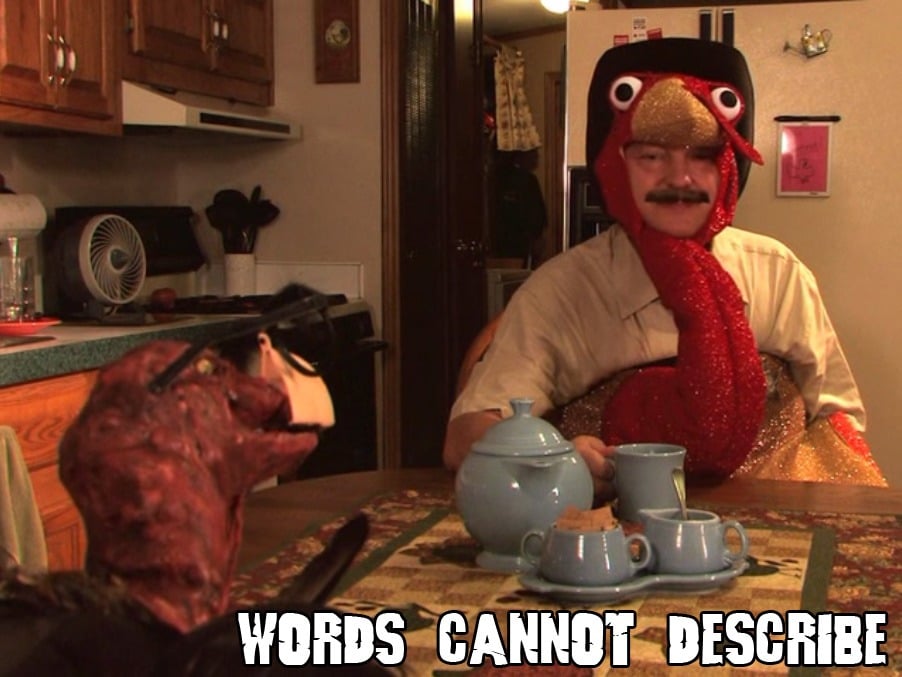
As ridiculous as this film is, as bad as the script and acting are, for how little money was clearly spent putting this film together, I nevertheless enjoyed ThanksKilling. I could string together a thousand complaints about the film, but none of them matter. This is an entertaining, low budget B-movie that makes no apologies for what it is. To that same end, I cannot make an exception based on intent. Make no mistake, this is not good cinema. Then again, you're reading a site called B-Movie Geek; you probably care as little about good cinema as I do. You may need a beer or two and group of friends to enjoy it properly, but ThanksKilling could be a great way to spend the evening after Thanksgiving dinner. Just don't think Grandma is going to enjoy it.
The Bottomline: This Thanksgiving the Geek would like to give thanks to the filmmakers for having the balls to put together a script about such a ridiculous antagonist, gathering the actors and funding, and then actually making this film. There is no reason for this movie to exist, but I'm glad it does. This is what low-budget filmmaking is all about.
Three stars.
I suppose there is always time for firsts, and today is the Geek's first critical look at a documentary. Zombiemania is a lovingly crafted piece chronicling the development of the current zombie craze that is currently permeating popular culture. The footage originally aired on SpaceCast, a Canadian television channel which in unavailable here in the States. I personally was able to catch Zombiemania on Netflix via their Instant Watch option.
The director, Donna Davies, is clearly passionate for the subject matter and does a commendable job presenting the inner workings of the genre in a way mainstream audiences will comprehend. Although one doesn't normally think of zombies as being the most complicated of movie tropes, there in fact exists a very rich history surrounding their origins. Zombies as villains can be traced back to some of the earliest films, but they were not the typical zombies that we think of today. In older movies, like White Zombie or King of the Zombies, zombies were the result of voodoo curses or other magics. These are normal, living people whose minds have been ensnared and their bodies enslaved to do their master's bidding.

When George Romero introduced the concept of the modern 'living dead' zombie, he subjugated an entire genre's worth of previous works and folklore. In the documentary, Romero himself admits that he never set out to categorically redefine the zombie as he has a deep seated appreciation for those older types. In fact, he claims, he initially did not refer to his living dead monsters as zombies, nor did he intend them to be interpreted as such. Despite this, each of the interview subjects give credit to Romero for being the father of the modern movie zombie.
Zombiemania talks to a number of people knowledgeable about the zombie phenomenon, from actors and make up artists, to authors and anthropologist. A couple of the more prominent names on this list include Zombie Survival Guide author Max Brooks, and special effects wizard Tom Savini. Each speaker brings their own unique views to the discussion. Savini, for instance, goes into detail about the types of make-up and effects that go into making a walking corpse look as realistic as it possibly can. His contributions shed light upon the various advancements in both effects technologies and application techniques that have occurred over the last thirty years. Max Brooks spends a good deal of time in seeming disbelief over the success of his two zombie-themed bestsellers, and showing his appreciation for the fans that are so dedicated to the concept.

Led by Brooks, the documentary spends some time exploring some of the more obscure facets of zombie movie fandom. One such trend that is gaining in popularity is the phenomenon of organized zombie walks. Essentially, groups of strangers gather together at a predetermined location, don costumes and make-up, and then make their way en mass to some secondary location, all while doing their best zombie impressions. It's presented as a fun, if somewhat sticky, way to spend an afternoon. As this sort of activity demonstrates, zombie fans can be very passionate and dedicated in ways that fans of other genres typically are not.
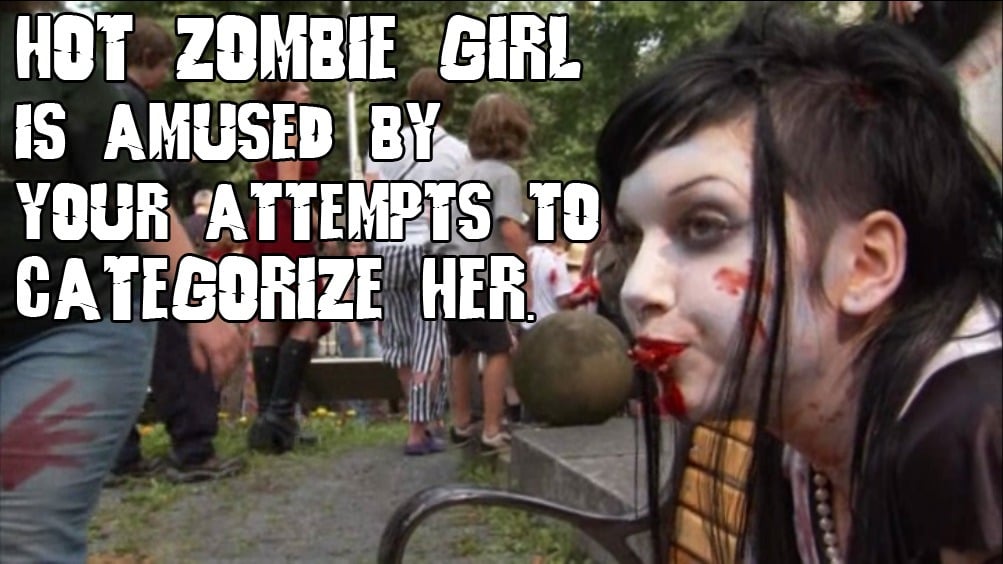
Zombiemania spends some time pondering what it is about zombies that appeals so strongly to the modern subconscious. The social commentary of the Romero films is touched upon, pressing the point that the underlying message of each of his films was always relevant to the decade in which the film was released. Night of the Living Dead has civil rights themes; Dawn of the Dead is about consumerism; Day of the Dead addresses ignoring the problem; and Land of the Dead about the increasing distance between the upper and the middle class. I have always felt that using societal context is a great way for Romero to add depth to his work. This lends a timelessness to his films, a property that endures even once the make up and special effects are long since outdated.

I really enjoyed this documentary, and felt it was a good use of the 56 minute runtime. Although there isn't a lot of material here that die hard fans are going to be unfamiliar with, it's always nice to see this information compiled into a single, accessible source. Having so much face-time with the big stars of the genre, both old and new, also helps to legitimize the proceedings for a wide swathe of an decidedly varied fan-base. That said, the documentary is not with its faults. The most glaring of these is the overly-energetic voice over work from a one-liner spewing narrator. I found that the humor contrasted poorly against the seriousness lent to the subject during the interviews. Given the ease with which one might be tempted to dismiss zombies as an academic subject, I felt the attempts at humor were somewhat ill advised (says the hypocritical man with humorously captioned pictures between every paragraph).

The Bottomline: Zombiemania is a loving tribute to a subject close to my heart. Although the lack of new information makes this geared more towards casual fans, any one who likes to see serious treatment of our chosen genre should be pleased.
Three stars.
I promised myself that I wasn't going to let this review serve as a digression into hyperbole theater, but honestly I don't think I'm going to be able to help myself. Trick 'r Treat is the best Halloween-themed movie I have seen since John Carpenter's seminal holiday classic. With this single project, the film's writer/director Michael Dougherty has catapulted himself into my pool of names to watch. This high praise may come as a bit of a shock to casual genre fans, taking into account that many of them have probably never even heard of this film, much less seen it.
Like other recent examples, Hatchet coming foremost to mind, Trick 'r Treat was never given the wide release its content deserves. Approximately one month prior to Trick 'r Treat's slated October 5, 2007 theater release, the film's distribution company, Warner Brothers, chose to bump it from this date without providing any explanation for the delay. A theatrical release was rumored for 2008 and again for 2009, but these whispers never came to fruition and the film was instead unceremoniously dumped straight to DVD. Although official reasons for the delay have never been announced, rumors point to the involvement of Bryan Singer's production company which was involved in getting Trick 'r Treat the greenlight at Warner Brothers. When Singer's reboot of the Superman franchise failed to generate big box office, it seems as though Warner chose to give the cold shoulder to other projects that Singer had been involved with, Trick 'r' Treat being one of those targeted.
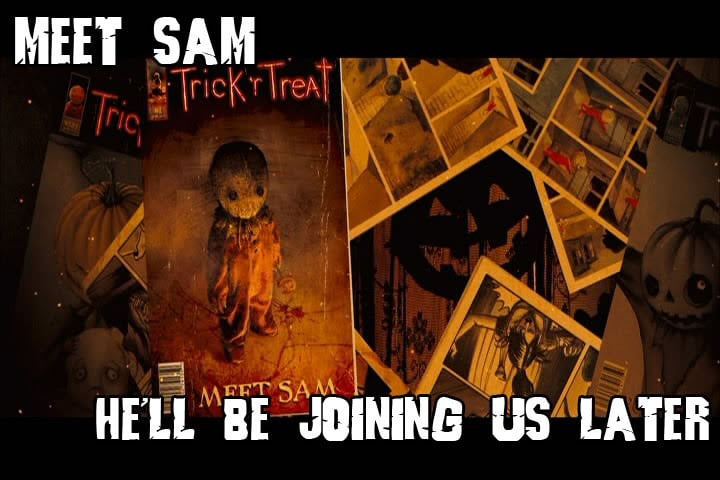
It's really too bad if this story is in fact true, because Warner Brothers really missed the boat on this film. With the proper marketing I could easily see this film, like recent genre titles Zombieland and Paranormal Activity, as generating high levels of buzz within the mainstream community. For the last several Halloween seasons, I have felt as though movie companies have not been catering to the needs of the horror audience. The only real push by a movie company worth mentioning is that by Lionsgate with the Saw films, but honestly I feel as though that franchise ran out of steam about four years ago. With a name like Trick 'r Treat, a simple title that is so strongly evocative of the holiday, it seems like a seasonal release of this film would be a safe, money-making decision.
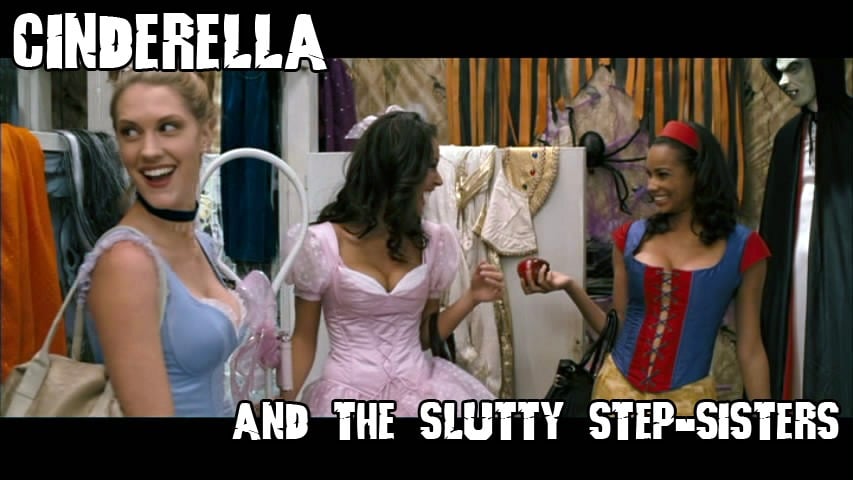
The film is an anthology piece, consisting of four overlapping and interwoven stories. The film plays with the chronology of the events in a style most commonly attributed as being reminiscent of Tarantino. As an aside, I feel this comparison does the film a disservice as the filmmaker has a very firm grasp of the genre, and the film's overall feel is that of a genuine and original horror film. Trick 'r Treat does not feeling like a kitschy rehash of better films (Sorry, Quentin. For what it's worth, I once really liked Reservoir Dogs). The film earns itself a solid R-rating, featuring many themes that could not be explored in a PG-13 film. For instance, many of the characters are grade school-aged children, whose untimely and violent ends ensure that this film could not have simply been edited to play to a younger audience.

The stories of the film center around one basic concept; observing and obeying the rules and traditions of the Halloween holiday. Given that the holiday has its roots in long forgotten customs and religious practices, there is a wealth of history that the movie uses to define its own internal mythology. Admittedly, many of the rules that the film throws out as tradition are ones that I have never heard of, but the way that they are presented as fact meant I never questioned their authenticity within the world of the film. This world is very similar to our own, except this is a world where ghouls and goblins do exist and all of the old legends are true. It's an interesting setting and I would like to see this universe revisited sometime down the line.
The first of the four stories features the principal of the local middle school relating stories of Halloween traditions and customs to one of his misbehaved students. The second follows the events of four promiscuous college-age hotties attending a party out in the middle of the forest. The third tale sees a small group of middle-school students venture into the local rock quarry, seemingly investigating tales of a horrible bus accident that occurred there many years ago. The final story revolves around an elderly recluse being terrorized by a mysterious costumed fiend. I don't want to get into the details of the various stories because a major factor contributing to my enjoyment came from discovering the various twists and turns as they unfolded. Every time a character from one story made a cameo in another, I felt rewarded for keeping my eyes open and connecting the dots between the chronology of the unfolding events.
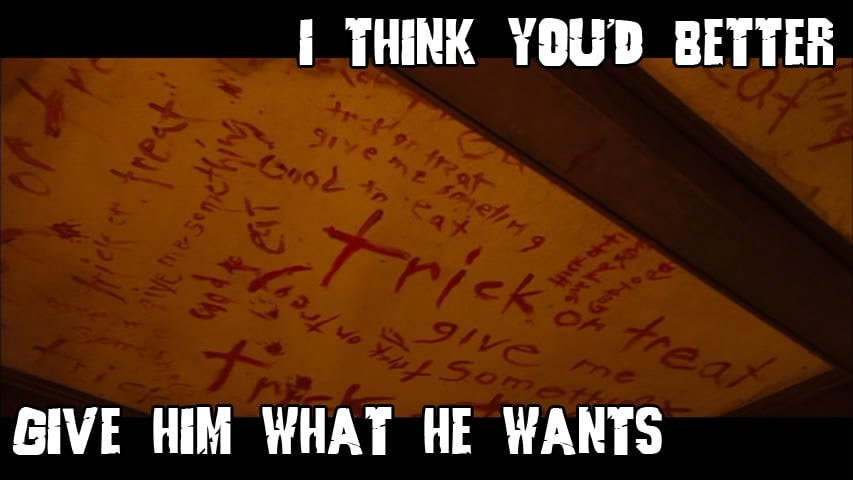
One of my favorite elements of Trick 'r Treat is the character of Sam, a child-sized entity wearing a sack-like scarecrow/pumpkin costume, whom makes appearances throughout all of the stories. There is an innocent, child-like quality to Sam that makes some of his later scenes that much more unnerving. The visual design of this character is really unique, especially in a world where grosser, nastier and more realistic villains are so commonplace. The simple sack mask that he wears is both creepy and immediately identifiable, traits that would serve him well should the world of Trick 'r Treat ever be developed into a franchise.

Typically, I do not care for anthology style films because they tend to fall into very similar trappings. In most anthology films, the individual tales are strung together by a group of characters relating the stories to one another. This is a convenient contrivance that is used because the script writers do not have to spend anytime determining how the stories are related to one another. Almost always there is a "twist" at the end of the film, showing the story-telling characters as suddenly being in danger because these otherworldly, supposedly-fictional terrors are real. This is a prime example of lazy story-telling to which Trick 'r Treat, thankfully, does not fall victim. Each of the stories are well thought-out and they are interwoven into an expertly crafted tapestry of terror.
The Bottomline: Trick 'r Treat is required Halloween viewing, deserving to be listed amongst the ranks of other holiday classics, like John Carpenter's Halloween. I simply cannot conceive of a true horror fan that doesn't find sheer joy in this film. Rent or buy it today!
Five stars.
Rob Zombie has spent considerable effort over the last decade trying to break into and legitimize himself in the horror filmmaking world. There can be no doubt that Zombie has shown himself to be very passionate about the genre and genuinely is trying to please the would-be fans of his films. Unfortunately for him, it seems that fans have largely been divided by Zombie's works instead of standing unified behind him.
Part of this divide is no doubt due to the choice of his projects. House of 1,000 Corpses was an extremely rough, amateur outing and its follow-up, The Devil's Rejects, was action-heavy and pushing the boundaries of what I'd considered a genre piece. The Halloween remake was sure to be a polarizing experiences for horror fans regardless as to whose hands the project was placed, and the sequel certainly wasn't going to do anything to change anyone's minds on the matter.
Given this history, I appreciated seeing a project from Rob Zombie that seemed to step so far away from his previous releases. The animated film The Haunted World of El Superbeasto is a definite departure from his other forays into filmmaking. Part of this is no doubt due to the fact that although the story and directing nods go to Zombie, a lot of artist and animators were involved in crafting and influencing the final product. The project still wears Zombie's horror roots squarely upon its sleeves, featuring demons, nazi zombies, werewolves, and vampires at various points in the story. However, El Superbeasto is not a work of horror, nor is it really a horror comedy. This film is a sex comedy that is merely sporting the visual trappings of the horror genre as a way of defining its personality.
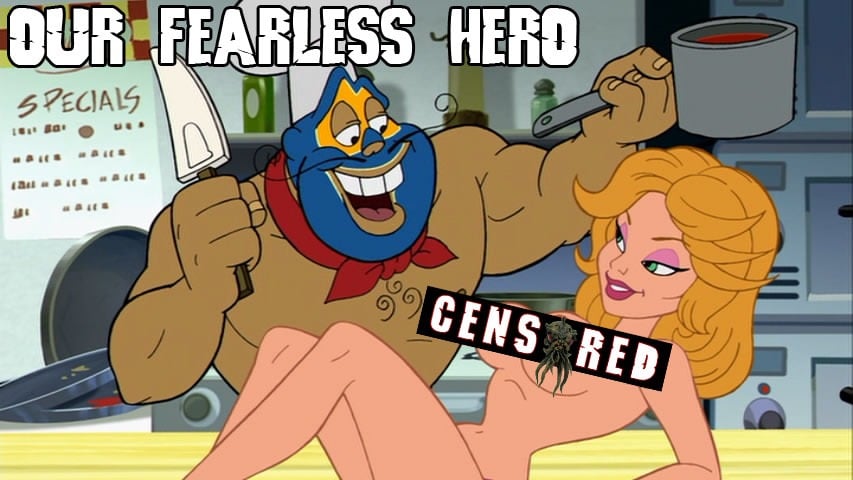
Although I felt much of the film was fairly incomprehensible, the plot itself is straightforward. Briefly, the evil Dr. Satan (a fun turn by Paul Giamatti) sends his lackey ape to kidnap the perpetually-naked, foul-mouthed stripper, Velvet Von Black (a ridiculously entertaining turn by Rosario Dawson). As the legend goes, once Dr. Satan must convince her to marry him so that he will be infused with the unstoppable powers of Old Scratchfoot himself. Conveniently, our hero Superbeasto happens to be in the strip club where Velvet is performing and has set his mind on banging the hell out of her. His desire to tap that ass provides his motivation in chasing after Velvet once she is kidnapped and serves as the central fuel for the forward momentum of the story. Really. Superbeasto is helped out on his quest by the ridiculously over-sexed character of Suzi-X, his crimefighting step-sister, and her perpetually horny man-bot sidekick. Hilarity ensues.
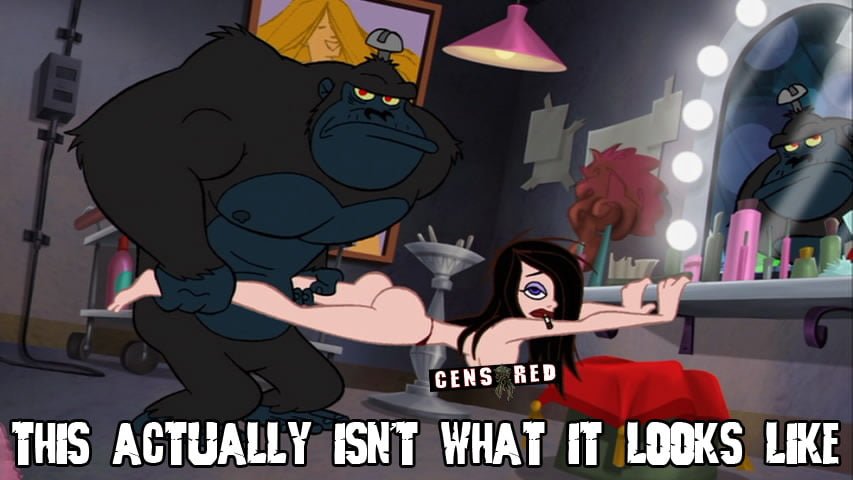
At this point in the review I feel the need to come clean. I don't know whether or not I liked this movie. Don't get me wrong, its sick and vulgar, humorous at times, and is definitely entertaining. But the story is so free-flowing and the events so random that the entire film feels somewhat disjointed and without purpose. For instance, the character of Suzi-X is introduced as she raids a zombie-nazi castle to steal/destroy the decapitated head of Zombie Hitler. Funny perhaps, and with winking towards Zombie's faux-trailer for Werewolf Women of the SS from the interludes in Grindhouse, but really completely unrelated to the rest of the film. In fact, the whole sequence comes off feeling like padding and, when your movie is only 77 minutes long, this suggests some fundamental problems with the scripting.
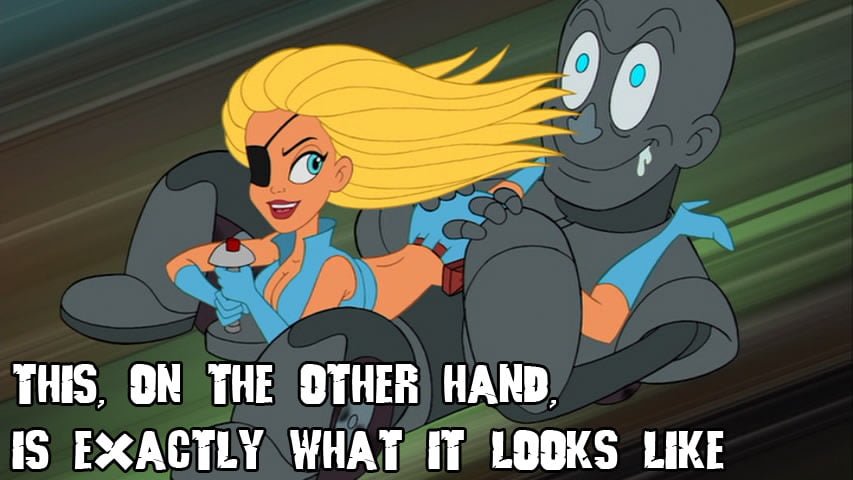
That said, the movie is entertaining. The runtime is short enough that although the overtly sexual gags and constant nudity stop feeling imaginative or edgy fairly quickly, they don't ever become grating. The animation helps with this because the novelty of watching cartoon characters perform these violent and sexual acts somehow remains strong throughout. This novelty is only helped by the quality of the animation, which is actually quite high. This should be expected considering the talent that worked on bringing The Haunted World of El Superbeasto to life are mostly industry veterans, whose collective credits include Pixar films, Disney movies, The Simpsons, and most of Cartoon Network's current lineup. You can tell that these artists had a ball drawing and animating the various depraved scenes on display here.
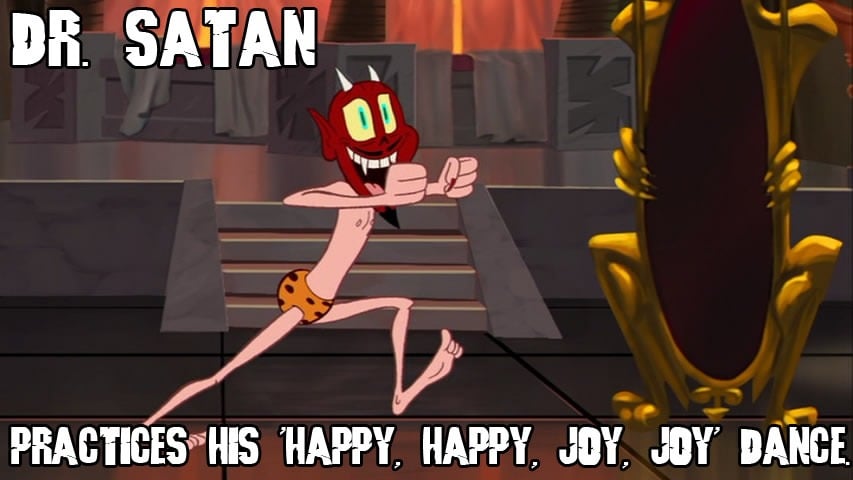
The Haunted World of El Superbeasto contains numerous nods and references to Zombie's previous works, film and music both. For instance, the iconic character of Captain Spaulding, played by genre favorite Sid Haig in Zombie's directorial debut House of 1,000 Corpses, makes an appearance here in animated form. Other regulars like Bill Moseley, Danny Trejo and Sheri Moon Zombie lend their likenesses and voices to the various characters in the film. In another nod to Zombie's previous works, the titular Superbeasto, a mask-wearing, egotistical, luchador superhero, shares his name with a successful single from early in Zombie's solo music career.

In the end, I'm conflicted about this film and must confess that the contradictions present in this review are a direct manifestation of those feelings. I think I liked The Haunted World of El Superbeasto, but I don't know if I'd favorably recommend it to anyone. At the same time, even if its shtick feels worn out by then end, the film is well made and does succeed at being genuinely entertaining. Given that, it seems as though a recommendation ought to follow in short order. Like I said, I'm conflicted. In the end, I don't suppose many people have ever seen a film quite like this one (except maybe those of you "lucky" enough to have caught Fritz the Cat). For the sheer novelty alone, I suppose this one is worth a watch. Part of me suspects that this is a film that I will look upon more favorably as more time passes from my initial viewing. Even as I write these words I'm beginning to feel the compulsion to watch it again. Perhaps a second viewing down the line will help clear up these mixed feelings.
The Bottomline: This film exists. I watched it. Maybe you should too? Be prepared for lots of cartoon violence and graphic nudity, although nothing dips into X-rated territory. Zombie fans should get a kick out of the numerous references to his other works.
Three stars.
In 1968 George A. Romero's first film, the seminal classic Night of the Living Dead, was released unto an unsuspecting public. The film spawned 3 direct sequels (Dawn of the Dead, Day of the Dead, and Land of the Dead) all of which were directed by Romero. Casual horror movie may have never previously noticed, but there is a subtle but distinct change in the naming scheme of the series beginning with the second installment. As part of an agreement with the somewhat lesser known Night of the Living Dead co-writer John Russo, Romero could go on tell more stories in the same universe, but Russo exclusively would retain the rights to use of the phrase "-of the Living Dead."
Return of the Living Dead is a cleverly developed concept from Russo that does not entirely forsake the Romero classic that came before it. The premise of Return of the Living Dead is based on the idea that the events that transpired in the original Night of- film were based on real events. As a character in the first act explains, the basics regarding reanimated corpses were true, but the filmmaker was forced by the military to change people's names and some facts regarding the basis of the outbreak. This scene retelling the release of the original film is sufficient homage to that which came before it but still allows for some new, fun twists along the way.

The film begins in a medical supply warehouse with the old caretaker relating the true story nature of the "Night of the Living Dead" zombie outbreak to a new employee. The old caretaker knows the truth of the story because their warehouse accidentally received a shipment consisting of a metal drum containing a bodyfrom the supposed outbreak. A mishap occurs and the metal drum is punctured, releasing the deadly reanimating agent 2,4,5 Trioxin into the basement. The gas spreads through the ducting system and ends up reanimating a corpse stored in the upper levels of the building. Eventually they corpse ends up dismembered and the owner of the medical supply warehouse calls in a favor with an old friend working at the local mortuary. They burn the still wriggling pieces in the furnace but end up releasing the reanimating gas into the atmosphere through the resulting smoke. A torrential thunderstorm carries the gas into the soil of the local cemetery releasing a horde of nigh-unstoppable, brain-craving ghouls.

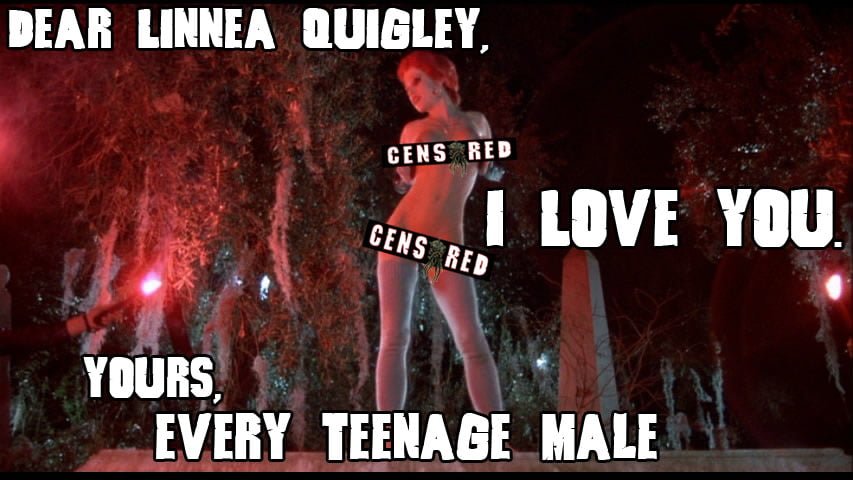
The story follows two separate groups of people, the aforementioned warehouse employees, and a group of punkish teenagers partying in said local cemetery. These younger characters are most definitely a product of the times, sporting a mishmash of giant 80's hair, leather jackets with chains, and styling mohawks. The collection of young actors do a suitable job playing the collection of fodder for the hungry monsters. Of special mention is 1980's scream queen Linnea Quigley playing the role that most every teenage male will remember her for; the young, nimble nymphomaniac, Trash. In a role that helped solidified her legend, Quigley sheds her clothes in a full frontal dancing scene about 20 minutes into the film and remains essentially naked for the entire runtime, even in scenes after her transformation into a zombie. Stories of theater audiences cheering every time Quigley came on screen, incredulous of the fact that this girl could possibly still be completely naked, are passed down amongst fans even today.
Return of the Living Dead departs from the standard Romero-Zombie mythos in several significant ways. Amongst the most noticeable to horror fans may be the ways that the zombies act and are dispatches. Foremost amongst these changes is the origins of one of the oldest zombie cliches. When asked what a zombie says, most anyone would immediately respond "Brains! Braaaaaains!" Despite this, the classic Romero-Zombie is incapable of speech. Not so in Return of the Dead. In fact, this may be the film that solidified that particular turn of phrase in the collective consciousness of pop culture. In another departure, these zombies do not just crave the flesh of the living, they crave the brain specifically and are quite vocal about their digestive needs.

Another major departure that many casual horror fans think is a recent invention of modern films like 28 Days Later and the Dawn of the Dead remake (2004) is the fast-moving zombie. In actuality, this particular zombie convention can be traced back to much earlier in the time-line of the genre. Return of the Living Dead features these fast moving zombies and even does one better over their contemporary counterparts; these zombies have intelligence. Although in later films the Romero-Zombies learned to use simple tools, these zombies show complex problem solving skills almost immediately, setting up traps and luring still-living victims into their midst using police and emergency radios. Worse still, the zombies in Return of the Living Dead are essentially unstoppable juggernauts that can only be destroyed by incinerating their bodies (or high electrical current, as in the sequel to this film). Destroying the brain or removing the head doesn't help as the rest of the reanimated body keeps coming.

Even with all the changes to the zombie mythos, the largest departure from the Romero films are found within the other components of the film, most notably to tone. The excess nudity on display here, a quality not found in any of the Romero films, is but one example of this shift in alignment. Return of the Living Dead is much more comedic, featuring elements of both black humor and slapstick. The score of the film consists almost entirely of popular heavy metal songs and also adds to the more light-hearted feel of the movie. Despite this, the film is still capable of producing an atmosphere of terror and dread. The constant screaming and moaning of the undead serve as a constants reminder of their presence and transforms the horde into an intangible entity even when off-screen. The only valid complaint I can lodge at the film is that its ending, while consistent with the internal logic of the unfolding events, comes entirely too suddenly and without enough build up.
The Bottomline: Given that my only major complaint is that Return of the Living Dead's 90-minute runtime is simply too short, you can guess that I was no less than thoroughly entertained by the film. With this film John Russo proved there was room for more than just Romero's vision of zombies within the horror genre.
Five stars.